Imagine a tool that can streamline complex data workflows, enhance collaboration, and boost productivity all at once. That’s exactly what GLDYQL promises to deliver. But what is GLDYQL, and why is it gaining traction among data professionals and businesses alike? This guide dives deep into the heart of GLDYQL, breaking down its core components, practical applications, and how it can transform the way you handle data.
What Is GLDYQL?
GLDYQL stands for Graph-Linked Dynamic Query Language. It’s a powerful query language designed to interact with graph databases, enabling users to retrieve, manipulate, and analyze data organized in graph structures. Unlike traditional query languages that are often limited to tabular data, GLDYQL thrives on relationships and connections, making it ideal for complex datasets where entities are interlinked.
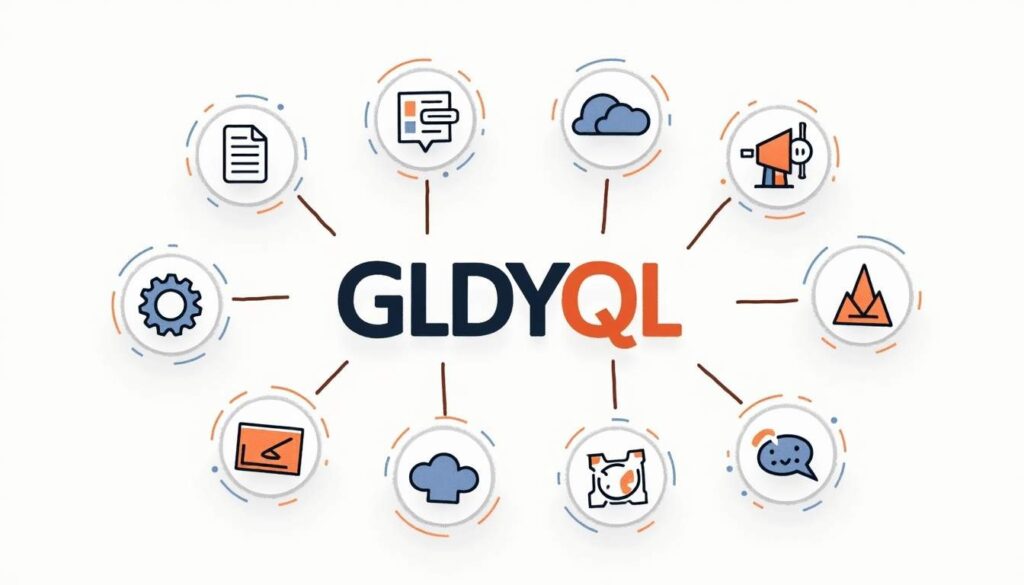
At its core, GLDYQL combines the flexibility of graph traversal with dynamic querying capabilities. This means it can not only fetch data based on static criteria but also adapt queries in real-time based on changing parameters or user inputs. This dynamic nature makes it especially useful in scenarios where data relationships are intricate and continuously evolving. For instance, in a social media context, as users interact and form new connections, GLDYQL can seamlessly update its queries to reflect these changes, providing insights that are always current and relevant.
How GLDYQL Differs from Other Query Languages
Most people are familiar with SQL, the standard language for relational databases. SQL works well when data fits neatly into tables with rows and columns. However, when data is more complex—think social networks, recommendation systems, or supply chains—SQL can become cumbersome and inefficient. The limitations of SQL often lead to performance bottlenecks, especially when dealing with large datasets where relationships are key to understanding the data’s context.
GLDYQL approaches data differently. Instead of focusing on tables, it focuses on nodes (entities) and edges (relationships). This graph-based perspective allows for more intuitive queries when dealing with interconnected data. For example, finding the shortest path between two points or discovering clusters within a network becomes straightforward with GLDYQL. Additionally, GLDYQL supports advanced analytical functions that can uncover hidden patterns and insights, such as community detection in social networks or anomaly detection in transactional data. This capability not only enhances the depth of analysis but also empowers businesses to make informed decisions based on real-time data insights.
Key Features of GLDYQL
GLDYQL isn’t just another query language; it’s packed with features tailored for modern data challenges.
1. Graph Traversal and Pattern Matching
At the heart of GLDYQL is its ability to traverse graphs efficiently. Users can specify patterns to match nodes and relationships, making it simple to extract complex subgraphs. This feature is invaluable for applications like fraud detection, where tracing suspicious connections quickly is critical. For instance, financial institutions can utilize this capability to identify unusual transaction patterns that may indicate fraudulent activities, allowing them to take proactive measures to mitigate risks. The intuitive syntax of GLDYQL also empowers data analysts to create sophisticated queries with minimal effort, enhancing productivity and enabling deeper insights into their data.
2. Dynamic Querying
Unlike static queries, GLDYQL supports dynamic parameters that can change during execution. This flexibility allows developers to build interactive applications where queries adjust based on user input or external data streams. Imagine a social media platform that personalizes content recommendations in real-time; GLDYQL can adapt its queries to reflect the latest user interactions, ensuring that the content remains relevant and engaging. This dynamic nature not only improves user experience but also opens up new avenues for data-driven decision-making, as businesses can respond to trends and shifts in user behavior almost instantaneously.
3. Integration with Multiple Data Sources
GLDYQL is designed to work seamlessly across various graph databases and can even integrate data from non-graph sources. This interoperability means organizations don’t have to overhaul their existing infrastructure to benefit from GLDYQL’s capabilities. By allowing data to flow freely between different systems, GLDYQL enables a more comprehensive view of information, which is crucial for effective analysis and reporting. For example, a healthcare provider can combine patient records from traditional databases with real-time health monitoring data, leading to more informed treatment plans and improved patient outcomes.
4. Scalability and Performance
Handling large-scale graph data is no small feat. GLDYQL incorporates optimization techniques such as indexing and parallel processing to ensure queries run efficiently, even on massive datasets. This scalability makes GLDYQL an ideal choice for organizations experiencing rapid data growth, as it can handle increasing workloads without sacrificing performance. Furthermore, the architecture of GLDYQL is designed to leverage cloud computing resources, allowing users to scale their operations dynamically based on demand. This means that whether a company is analyzing millions of nodes or billions of relationships, GLDYQL can maintain high performance, ensuring that users receive timely insights and can make data-driven decisions with confidence.
Practical Applications of GLDYQL
Understanding the theory is one thing, but seeing GLDYQL in action reveals its true value. Here are some real-world scenarios where GLDYQL shines.
Social Network Analysis
Social media platforms generate enormous amounts of interconnected data. GLDYQL can analyze user interactions, detect communities, and identify influencers by traversing the complex web of relationships. This insight helps marketers tailor campaigns and improve user engagement. For instance, by analyzing the connections between users, GLDYQL can uncover hidden clusters of like-minded individuals, allowing brands to target niche audiences more effectively. Furthermore, it can track sentiment over time, providing a dynamic view of how public perception shifts in response to marketing efforts or current events.
Recommendation Engines
By mapping user preferences and product attributes as a graph, GLDYQL enables sophisticated recommendation systems. It can identify patterns and similarities that traditional methods might miss, delivering more personalized suggestions. For example, in an e-commerce setting, GLDYQL can analyze not only what products are frequently purchased together but also the relationships between customer demographics and product categories. This multi-dimensional approach ensures that users receive recommendations that resonate with their unique tastes, leading to higher conversion rates and customer satisfaction.
Fraud Detection
Financial institutions use GLDYQL to spot unusual patterns indicative of fraud. By analyzing transaction networks, it becomes easier to detect anomalies and prevent illicit activities before they escalate. Beyond simple transaction monitoring, GLDYQL can also assess the relationships between different accounts and their transaction histories, flagging suspicious behaviors that may indicate collusion or organized fraud. This proactive approach not only safeguards assets but also enhances the institution’s reputation by fostering trust among customers.
Supply Chain Management
Supply chains involve multiple entities and relationships. GLDYQL helps visualize and optimize these networks, identifying bottlenecks and improving overall efficiency. For example, by mapping the flow of goods from suppliers to consumers, GLDYQL can highlight inefficiencies in logistics, such as delays caused by specific suppliers or transportation routes. Additionally, it can simulate various scenarios to predict the impact of changes in supply chain dynamics, enabling businesses to make informed decisions that enhance resilience and adaptability in a rapidly changing market environment.
Getting Started with GLDYQL
Ready to start using GLDYQL? Here’s a straightforward roadmap to help you dive in.
Choosing the Right Graph Database
GLDYQL works best with graph databases like Neo4j, Amazon Neptune, or TigerGraph. Each has its strengths, so consider your project’s scale, budget, and specific needs before selecting one.
Learning the Syntax
GLDYQL’s syntax is designed to be intuitive for those familiar with graph concepts. Basic commands involve MATCH clauses to specify patterns, WHERE clauses for filtering, and RETURN statements to output results. Many online tutorials and documentation resources can help you master these quickly.
Building Your First Query
Start simple. For example, to find all friends of a user in a social network, you might write a query that matches a user node and traverses “friend” relationships. Experiment with filtering and ordering results to get comfortable with the language.
Utilizing Tools and Libraries
Several development tools support GLDYQL, including integrated development environments (IDEs) with syntax highlighting and debugging features. Libraries for popular programming languages like Python and JavaScript make it easy to embed GLDYQL queries into your applications.
Challenges and Considerations
No technology is without its hurdles. GLDYQL comes with its own set of challenges that users should be aware of.

Learning Curve
For those accustomed to relational databases, thinking in terms of graphs can take some adjustment. The concepts of nodes, edges, and graph traversal require a shift in mindset.
Data Modeling Complexity
Designing an effective graph schema is crucial. Poorly structured graphs can lead to inefficient queries and confusing results. It’s important to plan your data model carefully, considering how entities relate and how queries will be constructed.
Performance Tuning
While GLDYQL is optimized for performance, very large graphs or complex queries can still be resource-intensive. Indexing strategies and query optimization techniques are essential to maintain responsiveness.
The Future of GLDYQL
Graph technology is evolving rapidly, and GLDYQL is at the forefront of this movement. As data becomes more interconnected, the demand for graph-based solutions will only grow.
Upcoming developments include enhanced support for real-time data streams, improved integration with machine learning frameworks, and expanded tooling for visualization and analytics. These advancements promise to make GLDYQL even more powerful and accessible.
Businesses that adopt GLDYQL early stand to gain a competitive edge by unlocking insights hidden within their complex data networks. Whether it’s improving customer experiences, detecting threats, or optimizing operations, GLDYQL offers a versatile and robust approach.
Summary
GLDYQL is more than just a query language; it’s a gateway to understanding and leveraging the rich connections within your data. Its graph-centric approach, dynamic capabilities, and broad applicability make it a valuable tool for anyone working with complex datasets.
From social networks to supply chains, GLDYQL helps uncover patterns and relationships that traditional methods might overlook. While it requires some learning and thoughtful data modeling, the benefits in insight and efficiency are well worth the effort.
Exploring GLDYQL today means preparing for a future where data is not just stored but truly connected and understood.